Work Transformers Labs · Research
Project Destination
Applied research into workplace strategy, hybrid working and the workplaces people choose to use. Home of Destination 2.0®.
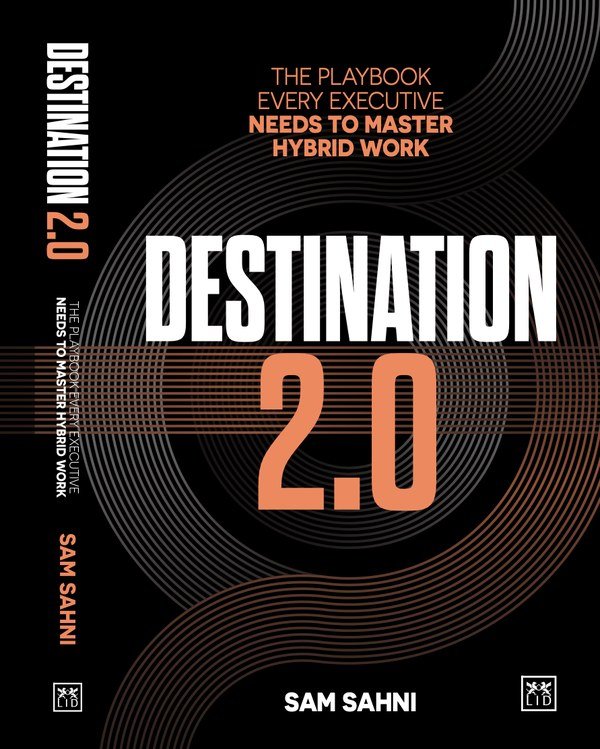
Applied research into workplace strategy, hybrid working and the workplaces people choose to use. Home of Destination 2.0®.
Work Transformers Labs is our internal research function. The work described here is a research programme exploring future methods, workflows and operating models in corporate real estate.
Simple systems and off-the-shelf skill files can move documents around. They cannot reason about your workplace. That reasoning has to come from somewhere. For the built environment, it comes from deep, applied research. Destination 2.0 is that research: a book, a framework and a body of thinking that powers the logic inside the systems we deploy for occupiers.
A checklist or a script has no judgement of its own. It only repeats steps. The judgement has to be designed in.
Good judgement comes from studying how the best decisions are actually made. That is what research gives a system.
Workplace and portfolio decisions are high-stakes, costly and hard to undo. They deserve more than a generic tool.
Hybrid work needs fast convergence, deep focus and instant flex. Most offices were built for predictable diaries, fixed desks and planned meetings. The gap shows up as a cost almost no one books.
Hybrid is not the cause. It is the mirror.
Because the design never adapted, we blame hybrid. But hybrid only exposed what was already true. Fix the design and the hybrid debate quietly disappears.
Workplaces should be designed for human performance, not surface metrics. Four measures change when you design for the human, not the floorplate.
Old: square metres per head.
Human efficiency: focus time saved.
Old: desk-to-meeting mix.
Human effectiveness: better outcomes per hour.
Old: branded reception.
Human emotion: pride in showing up.
Old: missing.
The fourth E: designed for the human.
Attention burned regulating noise, temperature and privacy, instead of doing the work.
Underrepresented groups feel tolerated, not designed for. Discretionary effort stalls quietly.
Creativity withers when hallway chats replace deliberate cross-functional problem-solving.
Sustainability pledges meet half-empty towers lit all night. Employees and investors notice.
None of these show up as a line in the P&L. All of them show up in the KPIs your board already cares about.
The way through is one connected operating model, not another project.
They are not eleven ideas. They are eleven modules, each one making the next work harder.
The framework turns occupancy, utilisation and survey data into an assessment and a roadmap leadership can act on.
The same eleven-pillar playbook, two companies: one soars, one stalls. The difference is never budget. It is the reflex of the people running it.
Old: I own my silo.
New: I orchestrate value across silos.
Old: survey, decide, announce.
New: co-create, prototype, refine.
Old: deliver the fit-out.
New: ship space, tech and rituals together.
Old: show me the ROI first.
New: prototype small, sunset fast.
One decision filter the whole leadership team can rally behind, so bad projects die before they cost.
An X-ray of how people really work. From the global PM parent to the neurodivergent coder.
Deep-work library, async studio, open cafe. One client cut overtime by 31% in six weeks.
Purpose is not a poster. It is an object people see daily and a question asked before every decision.
Sustainability stops being a brochure and starts auditing your floorplate. ESG and workplace converge, fast.
AI rewrites which moments need co-location and which do not. Real estate strategy must respond at AI speed.
Five generations, care obligations and neurodivergence at scale. The standard employee is retired.
Destination 2.0 is built so the AI absorbs these shifts, instead of being shocked by them.
Destination 2.0 is one example of how Labs works. The thinking does not stay in a book. It becomes the logic inside the systems we deploy, so an occupier system does not just process utilisation data, it reasons about the workplace the way an expert would. Research powers the reasoning. Reasoning shapes the AI. The AI serves the team.
See how occupier teams use us →Project Destination is open research into what makes a workplace one people actively choose, and how organisations design for it. We publish the questions we are wrestling with, the patterns that recur across real deployments, and the principles that hold up under pressure. We do not publish client data, or the parts of the method still being worked out. It is research, not a product: the questions are the interesting part, and the answers are earned in the work.
Destination 2.0 is research you can run on Monday morning, and the thinking behind the systems we deploy.